
How Sharp Eagle Prepares Process Equipment for Factory Expansion
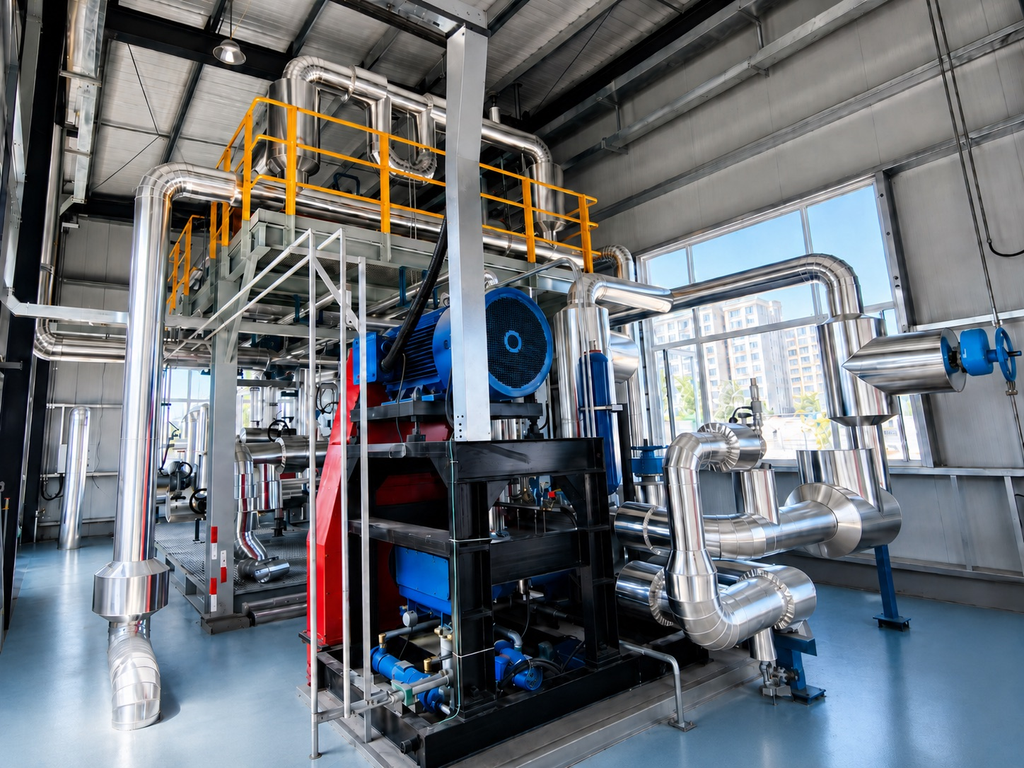
Expanding a factory means finding room for new equipment while coordinating people, materials, and installation work around it. Even a relatively small process addition can involve pumps, vessels, valves, instruments, cables, and several contractors. Sharp Eagle’s modular process skids bring those components together as assemblies built around the customer’s process and site requirements. Much of the fabrication, internal piping, and equipment integration happens in the workshop before delivery. For the customer, this changes what arrives at the gate: a defined process module with planned connections and completed assembly work, ready for the next stage of installation.
Deciding What to Build Before Arriving on Site
A skid is a structural frame carrying equipment that performs a particular process function. Depending on the application, it might supply material to a furnace, circulate fluid through a heat exchanger, or support a chemical pilot process.
The useful question is how much of that function can be assembled and checked before shipment.
For example, a furnace feed system may require flow measurement, pressure monitoring, regulating valves, and connections to the plant’s control system. Supplying these items separately leaves the site team to arrange and connect them. Integrating them into a module transfers much of that coordination to the manufacturer.
Sharp Eagle develops its skid layouts around process conditions, available space, control requirements, and installation needs. Equipment positions are considered alongside pipe routes, structural supports, and the space required for operation.
The customer still needs to prepare the destination. Foundations, utilities, external piping, and plant control connections must match the agreed supply boundaries.
A Polysilicon Expansion With Many Repeating Assemblies
Sharp Eagle’s polysilicon furnace feed project shows where this approach becomes useful.
According to the company’s published case study, the project formed part of a 24,000-ton high-purity polysilicon upgrade and expansion. Sharp Eagle delivered dozens of reduction furnace feed modules within two months.
Each module included static mixers, control valves, flowmeters, temperature and pressure instruments, safety valves, rupture discs, and manual and pneumatic valves. Piping, instrument cables, junction boxes, and air supply lines also had to be incorporated.
Repeating those installation tasks across many furnace systems would create a substantial amount of work at the destination. The position of a valve affects its piping. An instrument needs a suitable connection and a signal path. The completed arrangement must leave room for operators.
Sharp Eagle brought those parts together in the workshop, where welding, assembly, cleaning, and dimensional checks could be organized as part of module fabrication.
The reported delivery period describes this particular project. What makes the case useful more broadly is the division of work: the workshop handled integrated assemblies, leaving the site team to concentrate on lifting, positioning, and final connections.
Why the Equipment Inside Must Be Designed With the Module
Some skid systems contain vessels that store, heat, separate, or process fluids. Sharp Eagle manufactures pressure vessels, including heat exchangers, reactors, towers, and tanks, for specified operating requirements.
A vessel cannot be selected by capacity alone. Its contents, pressure, temperature, materials, and inspection needs all influence the design.
Its physical connections matter as well. A pipe connection placed on the wrong side may force a longer route through the module. An inspection opening positioned too close to another component may be difficult to use.
Sharp Eagle’s vessel manufacturing and skid integration capabilities allow these details to be considered together. The vessel arrangement can be reviewed alongside the frame, piping, instrumentation, and maintenance spaces before fabrication advances.
Its geothermal heat exchange project provides one example. The system involved high-pressure carbon dioxide equipment and thick-wall piping within a defined module envelope. The heat exchanger had to fit the process conditions while its surrounding connections remained practical to manufacture and operate.
This coordination gives the customer a clearer view of the complete assembly before individual components become expensive to change.
Cleanliness Is Part of the Construction Plan
In the polysilicon feed project, pipe cleanliness was a specific concern.
Cutting, grinding, and fitting pipework can leave dust or residue. When those activities happen around open systems at a busy site, the construction team has more contamination sources to manage.
Sharp Eagle completed fabrication and cleaning work in the workshop, reducing the amount of cutting and fitting required in the production area.
This approach also makes the sequence of work easier to organize. A section can be fabricated, inspected, and cleaned before it moves to the next stage, rather than remaining open while nearby activities continue.
Equipment still needs appropriate protection during transport and checks after installation. Workshop cleaning is one part of that sequence. Its value is greatest when the project also defines how the completed work will be preserved until commissioning.
Transport and Maintenance Belong in the Layout Review
A module has to work in several settings: the fabrication shop, the delivery route, the lifting operation, and its final position inside the plant.
That creates practical limits. A layout that fits the floor plan may be too large for the planned route. A tightly packed assembly may leave insufficient space to remove a component later.
Sharp Eagle’s engineering approach considers footprint, height, operating passages, maintenance access, and lifting requirements alongside equipment integration.
For the customer, reviewing these details early can prevent a misleading comparison based only on module dimensions. A slightly larger arrangement may be easier to inspect and maintain. A multi-module arrangement may be more practical to transport.
The choice depends on the process and site conditions, including the connections that will need to be completed after delivery.
Giving the Installation Team a Defined Handover
The work offered by sharp eagle covers engineering, procurement, fabrication, skid integration, testing, and installation and commissioning support. Its pressure vessel and process piping capabilities support the equipment assemblies delivered through that work.
Before shipment, the agreed testing scope should establish which pressure, instrument, and functional checks have been completed. Drawings and delivery records should identify the equipment configuration and the interfaces awaiting site connection.
The customer can then plan the remaining work against a defined assembly. Site crews know where the module goes, what it connects to, and which checks remain for commissioning.
For an expansion project, that clarity is a practical benefit. Sharp Eagle’s workshop work gives the installation team fewer separate components to assemble and a more organized handover. The project still requires site preparation and commissioning, but more of the equipment has already been built and checked before it arrives.