
Always-On Finance: What 24-Hour Money Services Changed
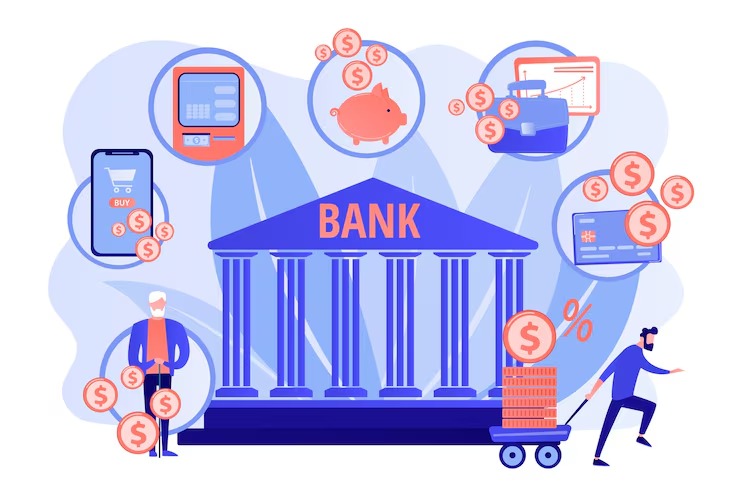
Banking hours were once a real constraint on human life. If you needed money on a Sunday, you did not get money on a Sunday. Entire categories of minor emergency, a car repair, a burst pipe, a plane ticket to a funeral, were shaped around the fact that the financial system slept when the bankers did. Within a single generation, that constraint has almost entirely dissolved. Transfers clear at three in the morning. Loan decisions render in ninety seconds. Support agents answer chat messages on public holidays. The financial system now keeps the same hours as the internet, which is to say, all of them.
This was sold as convenience, and it is convenient. But a system that never closes is a genuinely different animal from one that does, and the second-order effects have taken years to become visible.
Closing time used to function as accidental consumer protection. If you decided at eleven at night that you urgently needed to borrow money, you had to survive until the branch opened, and by then a meaningful fraction of urgent decisions had stopped feeling urgent. Sleep is an excellent risk-management tool. The overnight gap filtered out a great deal of financial behavior that people would have regretted.
Always-on services removed that filter without replacing it. The industry’s own data on application timing is consistent across markets: requests submitted late at night for short-term credit default at noticeably higher rates than identical requests submitted during business hours. The applicant is not different. The state of mind is. Round-the-clock availability means that the moment of maximum stress and the moment of maximum access now coincide perfectly, which is precisely the wrong alignment for good decisions.
Some operators have responded thoughtfully, introducing deliberate delays on high-risk products, requiring a second confirmation the following morning, or capping certain transaction types during overnight windows. These features are unglamorous and rarely marketed, but they represent an honest acknowledgment that instant is not always a feature.
What “24 Hours” Actually Means
The phrase gets used loosely, and the gap between marketing and mechanics matters. A service might advertise round-the-clock operation while meaning any of several quite different things: that its website accepts submissions at any hour, that automated processing runs continuously, that human staff are genuinely present overnight, or that funds actually move to the recipient outside business hours. Only the last one is what most customers assume they are buying.
The distinction becomes sharpest in short-term liquidity services, where timing is the entire value proposition. Stored-value conversion is a good example. Turning a gift-card balance or an unused card limit into spendable funds is a process with several stages, and each stage can be automated or not. Some markets have built whole product categories around compressing that timeline; in Korea, the overnight version of card-credit conversion is common enough to have its own shorthand, a service consumers refer to as 24-Hour Credit Card Cash Advance, meaning the round-the-clock form of converting card credit into cash. The practical question for anyone considering such a service is not whether the website is awake at two in the morning but whether settlement genuinely completes then, and what premium the overnight timing carries. Speed is almost never free, and the cost is frequently buried in a fee schedule rather than stated as an urgency surcharge.
The honest way to evaluate any always-on financial service is to ask what the same transaction costs during normal hours. If the answer is meaningfully less, then the customer is buying time, and buying time is a legitimate purchase only when the underlying need is genuinely time-sensitive. A great many overnight financial decisions are urgent in feeling rather than in fact.
Staffing the Night Shift
Behind every always-on service is a workforce arrangement that customers rarely think about. Continuous coverage requires either a distributed team spanning multiple time zones, an overnight shift with all its attendant human costs, or heavy automation with a thin human layer for exceptions. Each choice produces a different customer experience.
Time-zone distribution generally works well for straightforward queries and badly for anything requiring institutional context. Overnight shifts produce more consistent quality but are expensive and hard to staff, which means the teams tend to be small and easily overwhelmed by an incident. Automation-first models are cheap and fast until a case falls outside the script, at which point the customer discovers that “24-hour support” meant a chatbot with a queue that a human will look at when the day team arrives.
None of these arrangements is dishonest, but the differences are material and rarely disclosed. A useful test before committing to any always-on provider is to send a moderately complex question at an inconvenient hour and see what comes back. A thoughtful reply from someone who clearly read the question tells you more about a company than any amount of homepage copy.
Living With a System That Never Sleeps
The reasonable response to always-on finance is not to avoid it but to rebuild, personally, the friction that the system removed. That can be as simple as a private rule: no financial decision over a certain size gets made after a certain hour. It can mean keeping the account used for impulsive decisions separate from the one holding reserves, with a transfer delay between them. It can mean writing down, in the calm of a weekday afternoon, the specific circumstances under which fast expensive money would actually be worth it, so that the decision is made in advance rather than in the moment.
The always-on financial system is a genuine improvement for people facing genuine emergencies at inconvenient hours. It is a genuine hazard for people facing ordinary anxiety at three in the morning. The infrastructure cannot tell the difference between those two customers. Only the customer can, and only if they have decided beforehand which one they intend to be.